Is WHOOP worth it? How a wearable helps you hit your goals
This guide includes our WHOOP referral link. If you join through it, we get a free month of WHOOP membership, at no cost to you. We use WHOOP ourselves, and the app screenshots below are from our own account. How we handle links
Short answer
WHOOP is a screen-free band that tracks your sleep, recovery and training around the clock. Its real value is the habits behind results: sleeping more consistently, training hard on the right days, and seeing how late meals or drinks hit your body. Its sleep and heart-rate tracking hold up well in independent studies. Like every wearable, its calorie number is only a rough estimate, so pair it with your TDEE.
WHOOP member offer
Get a free WHOOP and one month free
The band comes with your membership, and your first month is on WHOOP when you join with our link.
Claim the offerPaid link: we get a free month of membership if you join. WHOOP sets the offer, prices and terms. Product image: WHOOP.
What WHOOP is
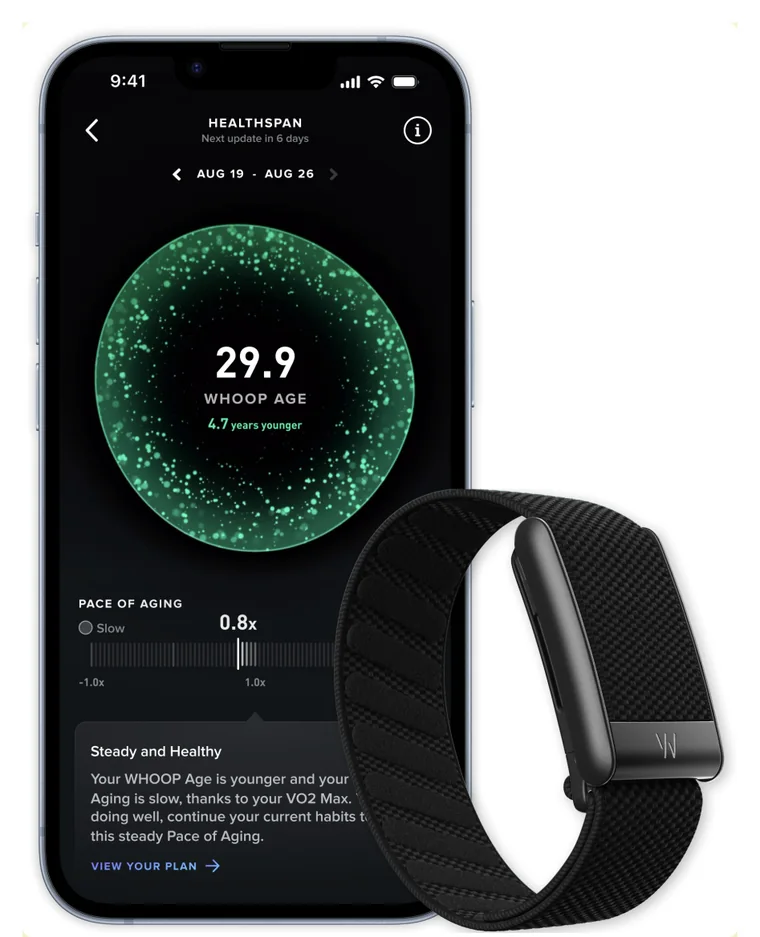
WHOOP is a small sensor on a fabric band, worn on your wrist or upper arm 24/7. There's no screen: you check everything in the WHOOP app. You don't buy the band. It comes with a membership, and the current WHOOP 5.0 and WHOOP MG bands last 14+ days per charge.
There are three membership tiers. They launched in May 2025 at these yearly prices; check WHOOP for today's prices and deals.
| Tier | What you get |
|---|---|
| One | Sleep, Recovery and Strain scores, steps, basic charger |
| Peak | Health Monitor (vitals out of range), Stress Monitor, Healthspan and WHOOP Age, wireless charger |
| Life | Everything in Peak, plus on-demand ECG, irregular rhythm alerts and blood pressure insights (beta) |
Most reviewers point people to Peak. It's the same band as One, but with the health and stress features most people want.
5 ways WHOOP can help you
1. It nudges you into better sleep
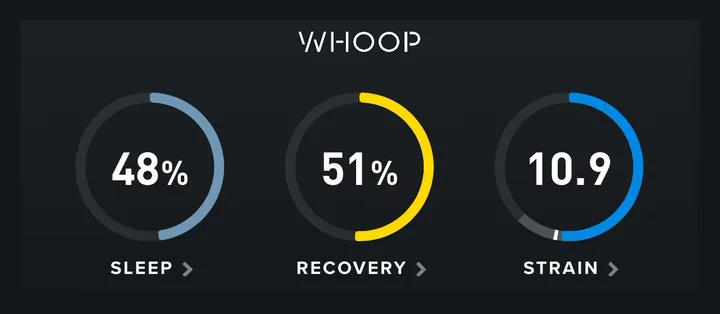
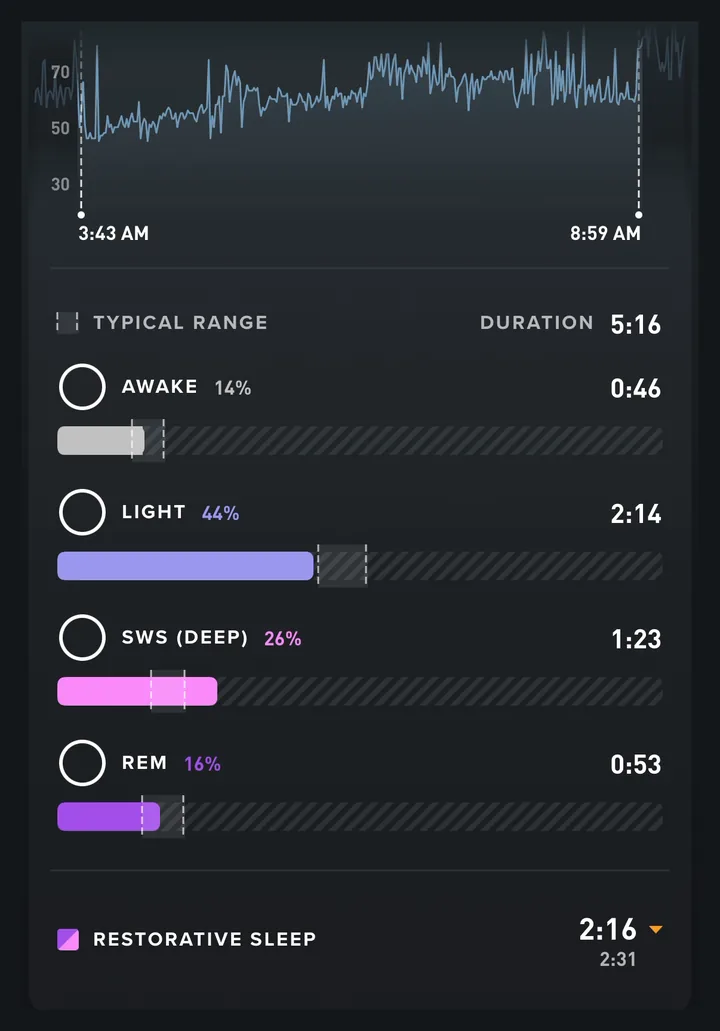
Sleep drives hunger, training and recovery, and WHOOP tracks it every night without you doing anything. In a randomized crossover trial at the University of Arizona, healthy adults reported better sleep quality during the week they wore WHOOP and saw their data than during a week of keeping sleep logs alone. It was a small study (32 people), funded by WHOOP and based on self-reported quality, so treat it as encouraging rather than proof.
- Use WHOOP's sleep recommendations to set a consistent bedtime and wake time.
- Check how much sleep WHOOP says you need after a hard day.
2. Recovery tells you when to push and when to back off
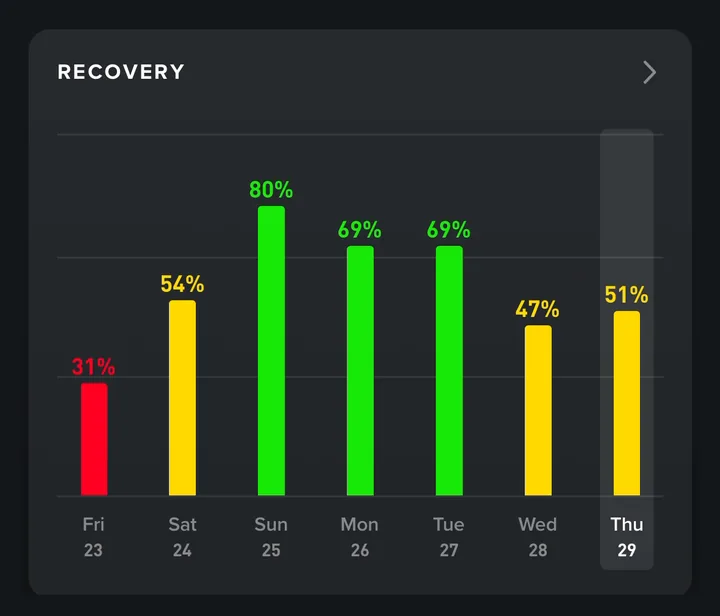
Each morning WHOOP gives you a Recovery score built from your heart rate variability (HRV), resting heart rate and sleep. A low score after a short night or a late drink is a cue to train lighter. In 16 weeks of tracking with Olympic water polo players, WHOOP's day-to-day HRV readings varied no more than HRV naturally does. That matters, because you're looking for real changes, not noise.
3. Strain and Strength Trainer track all your training
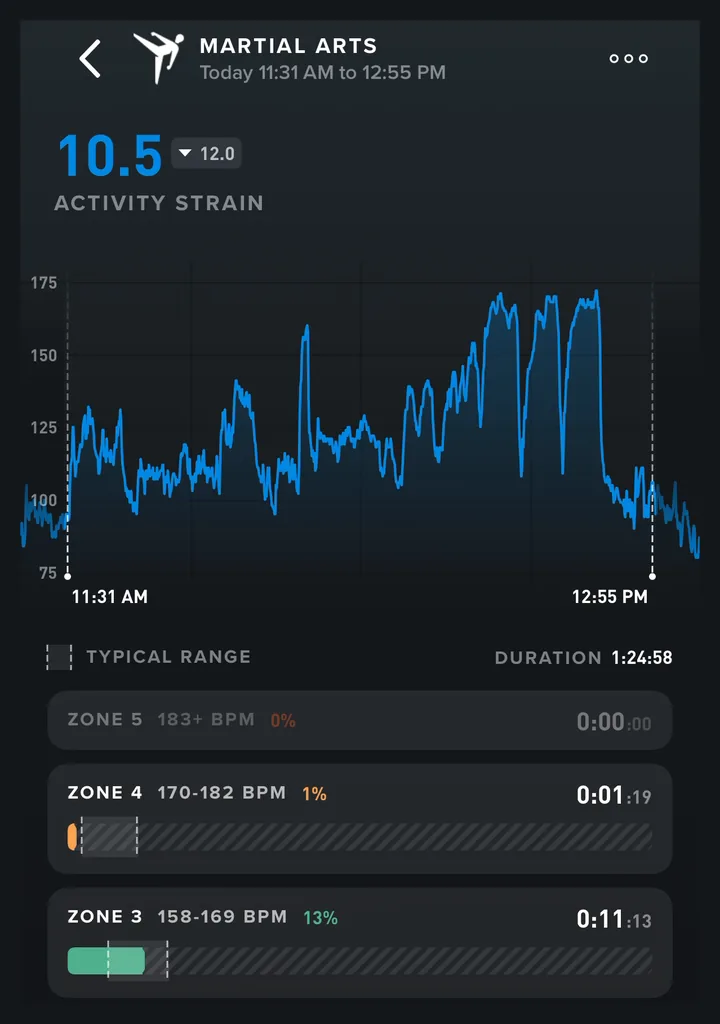
Strain scores how hard your day was, from cardio and lifting. Strength Trainer logs your sets, estimates muscular load, and now shows volume, history and personal records for each exercise. In 2026 WHOOP added AI-built workouts: tell WHOOP AI your goal, equipment and any limits, and it creates a session you can run in Strength Trainer.
4. You see what your habits actually do
The Journal lets you log things like alcohol, late meals or caffeine. Over time, WHOOP shows which ones line up with better or worse recovery. Seeing a drop in your own numbers after two glasses of wine can be more convincing than any article.
5. A longer-term view of your health
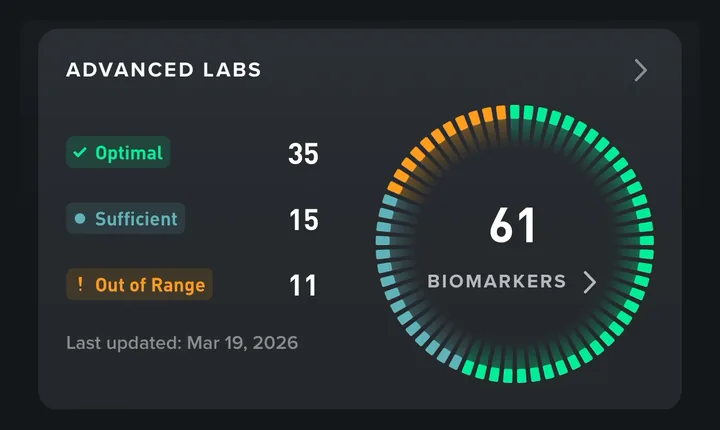
On Peak and Life, Healthspan estimates your "WHOOP Age" from sleep, strain and fitness trends. It was developed with the Buck Institute for Research on Aging. With Advanced Labs, you can add blood test results to your WHOOP data, and they now show up next to the matching Healthspan pillars.
ECG, blood pressure insights and health alerts are screening tools, not a diagnosis. If something looks off, see your doctor.
How accurate is WHOOP?
Independent labs have tested WHOOP against polysomnography (an overnight sleep lab test) and ECG. Here's how much weight each number can carry:
Trust it
Heart rate and breathing during sleep
In the Arizona study, sleeping heart rate was almost identical to ECG (average bias under 0.2%).
Trust it
When you slept and for how long
In a 53-person sleep-lab study, WHOOP 3.0 matched the lab's sleep or wake call 86% of the time. Researchers rated all six devices tested as valid for sleep timing and duration.
Use as a trend
Sleep stages (light, deep, REM)
Agreement on the exact stage was 60% in the same study, and every device tested needed work here. Watch trends over weeks, not one night.
Rough estimate
Calories burned
In a Stanford study, no wrist wearable estimated energy burned within 20%. WHOOP wasn't in that study, and we couldn't find a published test of its calorie numbers.
How to use WHOOP with your TDEE
This is where most people go wrong. Your watch says you burned 3,000 calories, so you eat 3,000, and the scale doesn't move. Use WHOOP for what it does well, and let your TDEE and the scale set your calories.
- Calculate your TDEE and pick your calorie target.
- Eat to that target. Don't add back the calories WHOOP says you burned in workouts; your activity level already counts them (here's why).
- Use WHOOP to keep the inputs steady: sleep, recovery and daily activity.
- After 2–3 weeks, compare your weekly average weight. If it hasn't moved, adjust by 100–200 calories a day.
If the scale is stuck, here are the 6 usual reasons.
Try WHOOP for a month, freePaid link · band included with membershipWho WHOOP suits, and who it doesn't
- Great fit: you train regularly, want coaching on sleep and recovery, and like a light band you can wear to bed without a screen lighting up.
- Great fit: you want to see how habits like alcohol, late meals and travel affect you, in your own data.
Maybe skip it if:
- You want a smartwatch with notifications, apps and maps on your wrist. WHOOP has no screen.
- You'd rather pay once than pay a membership.
- Tracking makes you anxious, or you have a history of disordered eating. Constant numbers can make that worse.
Common questions
Does WHOOP count calories?
It estimates calories burned from your heart rate and your profile (age, sex, height and weight). It doesn't track what you eat. Use it as a rough guide and set your intake from your TDEE.
Is the WHOOP band really free?
The band comes with your membership instead of being sold separately, so you pay for the membership. Joining with a member's referral link gets you your first month free. You'll see the exact terms at checkout.
Can WHOOP help me lose weight?
Not on its own: fat loss comes from a calorie deficit. WHOOP helps with what makes a deficit easier to stick to, like better sleep and steady training.
Ready to try it?
Get a free WHOOP and one month free
Track a month of sleep, recovery and training, then decide if it earns a spot on your wrist.
Join WHOOP with our linkPaid link: we get a free month of membership if you join. We're not otherwise connected to WHOOP, and WHOOP hasn't reviewed this guide.
Written by Peter Kohout, strength & conditioning coach
Sources
- Berryhill S et al. Effect of wearables on sleep in healthy individuals: a randomized crossover trial and validation study. J Clin Sleep Med, 2020.
- American Academy of Sleep Medicine. Study links sleep tracker with improved perception of sleep quality (funding note).
- Miller DJ, Sargent C, Roach GD. A validation of six wearable devices for estimating sleep, heart rate and heart rate variability in healthy adults. Sensors, 2022.
- Bellenger CR et al. Evaluating the typical day-to-day variability of WHOOP-derived heart rate variability in Olympic water polo athletes. Sensors, 2022.
- Shcherbina A et al. Accuracy in wrist-worn, sensor-based measurements of heart rate and energy expenditure in a diverse cohort. J Pers Med, 2017.
- WHOOP. WHOOP unveils WHOOP 5.0 and WHOOP MG (launch pricing). May 2025.
- TechRadar. Whoop unveils two brand new wearables, but their best features are hidden behind a paywall. 2025.
- Tom's Guide. Whoop 5.0 review.
- CNBC via NBC Miami. Whoop launches two new wearables with 14-day battery life. May 2025.
- WHOOP. What's new on WHOOP (2026 feature updates).
- WHOOP Support. Refer a Friend.